


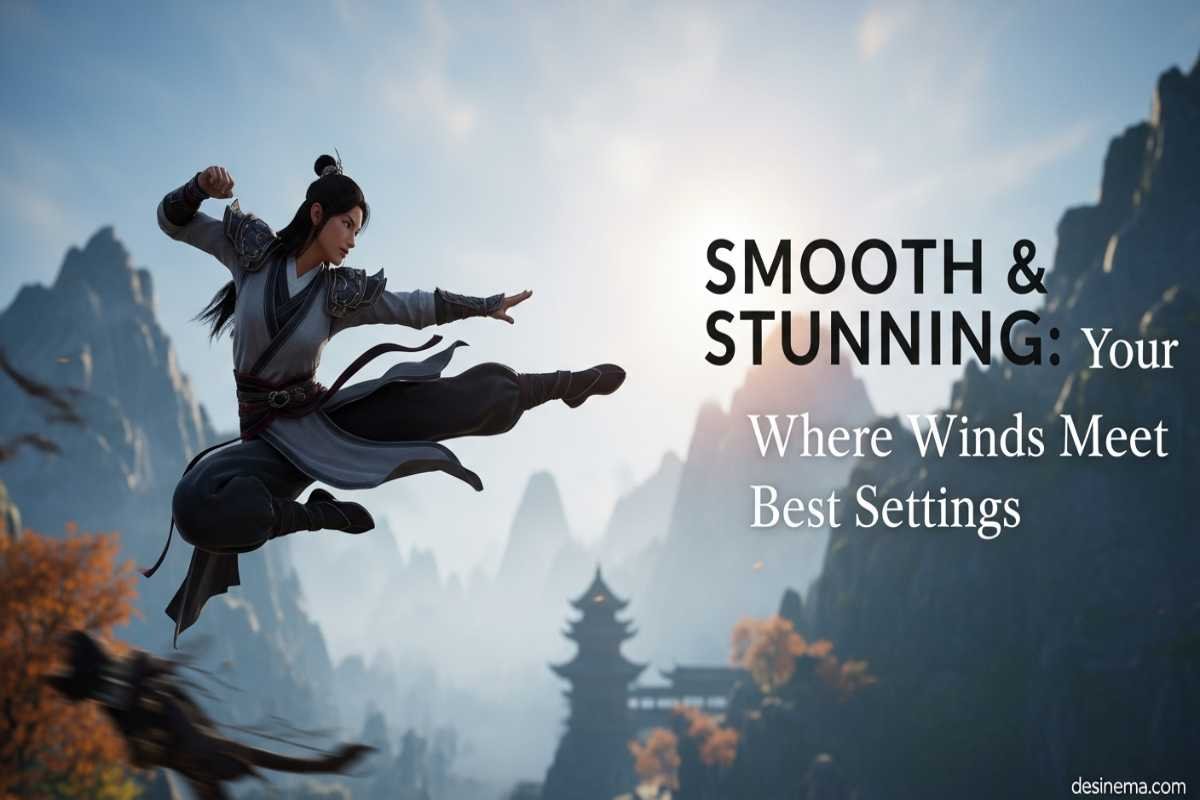
The world of Where Winds Meet is a stunning Wuxia masterpiece, full of breathtaking landscapes and fluid martial arts. But it’s hard to enjoy that beauty when your game is stuttering, your frame rate is dropping, and weird shimmering effects ruin the view. This is a common problem, especially at 1440p resolution.
Don’t worry, you don’t need a supercomputer to fix it. We’ve spent hours testing every option to find the perfect balance. This guide gives you the Where Winds Meet best settings to solve these issues, boost your performance, and make the game run smoothly while still looking incredible. Let’s dive in and get you back to enjoying the adventure.
Quick Overview: The Best Settings for Where Winds Meet
For those who want to jump right back into the game, here is a quick look at the most balanced settings. This setup provides the biggest performance gain with the smallest impact on visual quality.
| Graphic Setting | Recommended Value | Why It Works |
| Display Mode | Fullscreen | Gives your PC full focus on running the game. |
| Resolution | 2560 x 1440 | Your monitor’s native 1440p resolution. |
| V-Sync | Off | Reduces input lag; can be enabled in GPU panel if needed. |
| Vegetation Quality | Low | Huge FPS boost with very little noticeable visual loss. |
| Real-Time Sunlight | Off | A major performance hog for a minor visual effect. |
| Anti-Aliasing | DLAA (NVIDIA) / TAA (AMD/Intel) | The #1 fix for shimmering and jagged edges. |
| View Distance | High | Helps you see far away without a huge performance cost. |
| Lighting Quality | Medium | A good balance between beautiful lighting and stable FPS. |
Why is Optimizing Where Winds Meet So Tricky?
If you have a powerful PC but the game still struggles, you’re not alone. Where Winds Meet has a specific issue that makes it demanding: it can be Where Winds Meet CPU bound.
Think of it like this: your graphics card (GPU) is a super-fast artist ready to draw the beautiful world. Your processor (CPU) is the manager telling the artist what to draw. In this game, the manager sometimes gets overwhelmed, especially in busy cities with many characters. Even if your artist is waiting, the manager can’t give instructions fast enough, causing stutters.
This problem is why simply lowering every setting to the ground doesn’t always fix things. You need a smart approach that balances the workload between your CPU and GPU, especially for the demanding Where Winds Meet 1440p resolution.
The Complete Where Winds Meet Graphics Settings Guide
Here’s a breakdown of the most important settings and our recommendations. We’ll explain what each one does so you can understand the choices you’re making.
- Ambient Occlusion: Medium. This adds realistic shadows where objects meet. Medium gives you a good sense of depth without tanking your FPS.
- Tessellation: Medium. This setting adds more detail and geometry to surfaces, like cobblestone roads. Medium keeps things looking sharp without overworking your GPU.
- Vegetation Quality: Low. This is one of the biggest wins for performance. Turning this down can give you a 10-15% FPS boost, and you’ll barely notice the difference in the heat of battle.
- Lighting Quality: Medium. This controls how light behaves in the world. Medium provides beautiful, atmospheric lighting that feels immersive but is much less demanding than High.
- View Distance: High. Seeing enemies and landmarks from far away is important. High gives you a great view without a huge performance hit like the Ultra setting.
- Effect Quality: High. This controls the look of your special moves and combat effects. You want these to look amazing, and the High setting doesn’t cost too much performance.
- Reflection Quality: High. This makes water and shiny surfaces look realistic. It’s worth keeping on High for the visual payoff, as it mainly affects specific areas.
- Real-Time Sunlight: Off. Turning this off is another easy way to gain a lot of performance back. The game’s lighting still looks fantastic without it.
If you are just starting your journey, our beginner’s guide to Where Winds Meet can help you get acquainted with the world.
How to Permanently Fix Annoying Shimmering?
Shimmering, or that glittery, crawling look on edges and distant objects, is the most common visual complaint. The solution is to find the best anti-aliasing for Where Winds Meet, which smooths out these jagged lines.
For NVIDIA RTX Cards: Your Best Option
If you have an NVIDIA RTX graphics card (20-series or newer), the answer is simple: use DLAA.
DLAA (Deep Learning Anti-Aliasing) uses AI to create an incredibly sharp and stable image at your native resolution. It is the single best way to Where Winds Meet fix shimmering. If you still need more frames, you can use Where Winds Meet DLSS on the “Quality” setting, which will give you a performance boost while still looking great.
For AMD and Intel Cards: The Reliable Choice
For AMD and Intel GPU users, the game’s implementation of Where Winds Meet FSR and XeSS can sometimes make shimmering worse. The technology is great, but it seems to struggle in this particular game.
The most reliable solution is to use the game’s built-in TAA (Temporal Anti-Aliasing). It might make the image a tiny bit softer than DLAA, but it provides a much more stable and clean picture than the other options available to you.
Pro Tips to Boost Performance Even More
Once you’ve dialed in your Where Winds Meet graphics settings, you can take a few extra steps to squeeze out even more performance.
- Update Your Graphics Drivers: This is the most important step. Both NVIDIA and AMD release “game-ready” drivers that include specific optimizations for new titles. Make sure you have the latest version.
- Close Background Apps: Programs like web browsers, Discord, or streaming software can use a surprising amount of CPU power. Close anything you don’t need while playing to free up resources.
- Enable XMP/DOCP in BIOS: This is a slightly more advanced tip. XMP (for Intel) or DOCP (for AMD) is a setting in your computer’s BIOS that makes sure your RAM is running at its advertised top speed. It’s free performance that might be sitting on the table.
- Use Windows Game Mode: Make sure Game Mode is enabled in your Windows settings. It helps Windows prioritize your game and limit background activity. This is a simple way to Where Winds Meet boost performance.
For more tips on getting the most out of your hardware, check out our guide on the best PC gaming hardware.
Frequently Asked Questions
Why does my game still stutter even with the best settings?
Stuttering is often caused by a CPU bottleneck, not a GPU one. This is especially true in crowded cities or during large fights. Make sure to close background applications that use CPU power. Also, ensure the game is installed on a fast SSD (Solid State Drive), as loading assets from a slow hard drive can cause stutters.
What is the difference between DLSS, FSR, and TAA?
They are all types of anti-aliasing used to smooth jagged edges.
- TAA is a traditional method that works on all GPUs. It’s good but can sometimes cause a soft or slightly blurry image.
- DLSS (NVIDIA only) and FSR (all GPUs) are “upscalers.” They render the game at a lower resolution and then use AI or smart algorithms to scale it up to your screen’s resolution. This gives you a huge performance boost. DLAA is a special version of DLSS that focuses only on image quality without the upscaling part.
Should I cap my FPS or leave it unlimited?
This is personal preference. Leaving it unlimited can give you the highest possible frame rate, but it can also cause your GPU to work at 100% all the time, generating more heat and noise. Capping your FPS just below your monitor’s refresh rate (e.g., 140 FPS on a 144Hz monitor) can provide a smoother, more consistent experience and reduce screen tearing.
Which graphics setting has the biggest impact on performance?
Generally, the settings with the biggest impact are Vegetation Quality, Shadows, Lighting Quality, and Real-Time Sunlight. If you need a quick FPS boost, turning these down from High to Medium or Low is the fastest way to get it.
How do I know if my CPU or GPU is the bottleneck?
You can use a monitoring tool like MSI Afterburner. While playing, if your GPU usage is consistently at 99-100% and your CPU usage is lower, you are GPU-bound. If your GPU usage is much lower (e.g., 70%) but one or more of your CPU cores is at 100%, you are CPU-bound.
Can these settings fix the grainy or blurry look in the game?
Yes. A grainy or blurry look is often a side effect of aggressive upscaling (like FSR or DLSS on “Performance” mode) or a poor TAA implementation. Using DLAA on NVIDIA cards or sticking with standard TAA on AMD/Intel cards should provide a much clearer and more stable image.
Is it better to turn V-Sync on in the game or in my GPU control panel?
It’s almost always better to turn V-Sync off in the game and enable it through your GPU’s control panel (NVIDIA Control Panel or AMD Adrenalin Software) if you experience screen tearing. In-game V-Sync can sometimes add significant input lag, making the controls feel sluggish. For a complete walkthrough, our guide on updating GPU drivers covers accessing these panels.
Your Adventure Awaits
Optimizing a new and demanding game can feel like a chore, but it doesn’t have to be. By following this guide, you can make smart adjustments that solve the biggest problems without making the game look bad. The key is to lower high-impact settings like Vegetation and use the right anti-aliasing for your hardware.
With these Where Winds Meet best settings, you can stop worrying about your frame rate and finally immerse yourself in the beautiful and deadly world of Wuxia.
What settings worked best for you? Share your PC specs and tips in the comments below!
